 AI All-in-One
 Ecom Tools
 Others
 AI
AI AI Audio
 AI Dev Tools
 Cloud & Storage
 Edu Tools
 Relax Tools
 Ecom Tools
Toidispy
$246.00
$246.00
Sent via customer’s email
12-24hrs

All-in-one Subscription
TOIDISPY – Best idea research tool. With thousands of posts per day, we confidently provide you with the best idea research tool.
Official website: https://toidispy.com/
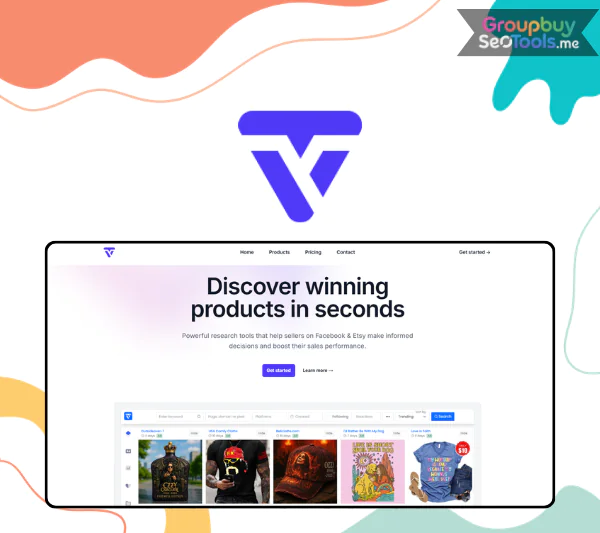 Finding winning products in 2026 is harder than ever. Algorithms shift, ad costs climb, and the difference between a profitable launch and a quiet flop often comes down to one thing: information. Toidispy is a product research and ad spy platform built to give print on demand sellers, dropshippers, and ecommerce advertisers an edge on Facebook, TikTok, Etsy, and Shopify.
In this complete 2026 guide, you will learn what Toidispy is, what it does, how to use it step by step, how it compares with other tools, and whether it deserves a place in your stack. Backed by a team with more than 10 years of experience in software and ecommerce tools, Toidispy is more than a search engine for ads. It is a daily research engine that surfaces winning products before your competitors do.
Here is what this guide will cover:
Before we dive into advanced strategies, let us pin down exactly what Toidispy is and what it actually does.

Toidispy is, at its core, a product research and ad spy tool purpose built for print on demand (POD) and dropshipping sellers. It combines two pieces of software that work together: a Chrome extension that quietly reads and collects ad data while you browse Facebook, TikTok, and other feeds, and a web dashboard where you search, filter, and analyze every ad and product the system has indexed.
Built by a team with more than 10 years of experience producing ecommerce software and growth tools, Toidispy is designed for one specific outcome: shortening the path between “I need a winning product” and “I have one running profitably.”
Here is what Toidispy is built to help you do:
Toidispy is built for solo sellers, two person Etsy shops, growth focused ecommerce brands, and agencies running multiple ad accounts. Whether you sell custom mugs, pet portraits, ergonomic gadgets, or trending kitchen tools, Toidispy gives you the same kind of visibility that large advertisers have always paid premium prices for.
The platform treats product research not as guesswork but as a data driven process, which is exactly why it has become a staple in many serious ecommerce stacks. Instead of betting your ad budget on a hunch, you bet on what is already working in the market today.
Toidispy packs an impressive set of features into a single platform, but the most useful way to understand them is by grouping them around the workflow they support. Every feature listed below answers a practical question a seller asks during product research.
Here is a quick reference table:
| Feature Group | Specific Feature | What It Does | Why It Helps POD and Dropshipping |
| Ad Discovery | Global ad search | Searches products and keywords across Facebook and TikTok ads | See what is actively selling in your niche |
| Ad Discovery | Hidden post detection | Reveals dark posts not visible on profiles | Uncover secret scaling campaigns |
| Filtering | Keyword and niche filters | Targets specific product categories | Deep dive into a profitable corner |
| Filtering | Engagement filters | Sorts by likes, shares, and comments | Prioritize proven winners |
| Filtering | Date range filters | Compares new versus evergreen campaigns | Spot trends and stable sellers |
| Competitor | Domain and pixel filters | Tracks ads from a specific store | Spy on direct competitors |
| Analytics | Engagement and consistency | Measures activity over time | Confirm a product is still profitable |
| Workflow | CSV and product list export | Exports research for further analysis | Move ideas into testing pipelines |
| Extension | On page ad capture | Collects ad IDs as you browse | Build a curated product bank |
Features are only valuable if you can turn them into a repeatable workflow, so let us walk through exactly how to use Toidispy step by step.
Getting started with Toidispy is far simpler than most newcomers expect. The following workflow takes you from a blank account to a shortlist of validated products, and it is the exact sequence many successful POD and dropshipping sellers use every week.
What used to take three to five hours of aimless scrolling now takes 20 to 30 focused minutes. Once you are comfortable using Toidispy to find products, you can start using its filters more strategically to uncover truly unique angles.

Print on demand is a beautiful business model: no inventory, no warehouses, and a global supply chain ready to ship a single custom mug. The catch is that it relies almost entirely on design and niche selection. A great POD product is not a clever item; it is a clever feeling delivered through a familiar item. Toidispy is built to find those feelings before your competitors do.
Inside Toidispy you can quickly identify design styles that are trending, whether that is minimalist line art, retro fonts, watercolor pet portraits, or hand drawn family illustrations. You can see which product types are getting the strongest traction in any given month, from mugs and canvases to hoodies, posters, blankets, ornaments, and tumblers. Most importantly, you can spot the emotional angles that move people to buy, such as family pride, pet love, occupation humor, hobby identity, or remembrance.
A simple POD workflow looks like this. Search for terms such as “personalized mug” or “custom necklace,” filter for high engagement within the last 30 to 90 days, then analyze which design elements repeat across the winners. Are several top ads using the same color palette? The same emotional caption? The same Etsy style mockup? Translate those patterns into a unique but inspired design brief for your team or freelance designer.
The data you collect inside Toidispy then feeds directly into your sales channels. Use the ad copy you study to inform Etsy titles and tags. Use the strongest hero images you observe to shape Shopify landing page design. Use the captions and hooks from winning Facebook and TikTok ads as creative briefs for your own video ads.
Here is a real style example. A seller noticed multiple ads for custom pet portraits printed on blankets, each pulling more than 1,000 reactions over a month. Instead of copying, they used Toidispy data to identify a less competitive dog breed niche and launched a fresh blanket line aimed at owners of senior dogs. The result was a hot selling product line with far less competition than the obvious top breeds.
Traditional dropshipping has always carried one painful risk: spending real money testing products that were never going to win. Many beginners pick items based on AliExpress best seller lists, TikTok hype videos, or a feeling, then burn through their ad budget proving the obvious. Toidispy attacks this problem directly by replacing intuition with evidence.
When you find a candidate product, Toidispy answers three crucial questions. Is anyone actually scaling this product right now? Which audiences and angles are working for it? And is the market already too crowded to enter profitably?
Use this short Toidispy validation checklist before you commit to a product:
Pair this research with supplier checks for stock, shipping times, and quality, then run a quick margin calculation to confirm the math works. For example, one seller used Toidispy to spot an ergonomic kitchen gadget that had been consistently advertised by multiple stores for more than three months. That kind of sustained activity is a strong signal of stable demand. They sourced a slightly improved version from a different supplier, added a bundle offer, and stepped into a proven market without having to invent it from scratch.
Dropshipping rewards speed, but it punishes carelessness. Toidispy gives you the speed without forcing the carelessness, which is exactly what most stores need to make this business model sustainable in 2026.
Numbers on a dashboard look authoritative, but they can also mislead. The skill of using Toidispy well comes from interpreting what its metrics actually mean. Likes and reactions tell you that an ad caught attention, not that the product sold. Comments are a richer signal, especially when shoppers ask “where can I buy this?” instead of just tagging a friend. Shares hint at virality, which is fantastic for awareness but does not always translate to revenue.
The most underrated metric is how long an ad has been running. An ad that has been live for 60 days and refreshed several times is almost always more valuable to study than one that exploded in a week and disappeared.
Toidispy also surfaces what could be called hidden signals. Multiple creative variations for the same product mean the advertiser is heavily testing, which is a sign they believe in the offer. Consistent relaunching of similar ads shows sustained performance, not a flash in the pan. The same domain appearing across many winning ads tells you which stores have figured out a repeatable formula worth studying.
A practical interpretation framework looks like this:
Always remember the limits. Toidispy cannot show profit margins, return on ad spend, or refund rates. Some excellent niche products generate steady revenue without producing public engagement fireworks.
The ad spy category has grown crowded. Some tools focus on TikTok creatives, others mirror the Facebook Ad Library, and a few try to be all in one suites that cost hundreds of dollars per month. Each has its place, but they are not interchangeable. Knowing where Toidispy fits is the fastest way to avoid overspending on tools you do not need.
| Tool Type | Best For | Main Strengths | Trade Offs Compared To Toidispy |
| TikTok creative libraries | Short form video studios | Deep video creative inspiration | Weaker for static ads and POD listings |
| Facebook Ad Library mirrors | Brand monitoring | Free or low cost basic search | Limited filtering, no hidden posts |
| Etsy only research tools | Etsy sellers | Tags, keywords, listing data | No Facebook or TikTok ad visibility |
| Amazon only research tools | Amazon sellers | Sales rank and review tracking | Not focused on ad creatives or POD |
| All in one ecom suites | Agencies and large brands | Wide coverage, deep analytics | Expensive and complex for solo sellers |
Toidispy slots into this landscape with a distinct identity. It is built for the small to mid sized seller who wants actionable, product first research rather than a flood of creative inspiration with no clear next step. Its strongest advantages are tight alignment with the POD and dropshipping workflow, visibility into hidden posts that lighter free tools simply cannot see, and a usability level that beginners can pick up in an afternoon while still offering filters and exports advanced users actually need.
There are two healthy ways to use Toidispy. As a primary tool, it carries solo sellers and small teams comfortably through niche selection, validation, and creative inspiration. As a complementary tool, it pairs well with a dedicated TikTok creative scraper, an Etsy keyword tool, or a sales analytics platform for sellers who want maximum depth in every direction.
For most POD and dropshipping operators, the honest answer is that Toidispy alone covers the majority of what they need. Bigger stacks become useful as you scale past a certain revenue threshold, but Toidispy remains the engine of daily product research.
Here is the honest verdict. For anyone serious about selling on Facebook, TikTok, Etsy, or Shopify in 2026, Toidispy pays for itself faster than almost any other tool you could buy. A single avoided product test, which often costs $50 to $200 in ad spend, can cover an entire month of access.
Pros
Cons
Who should invest right now? If you are an active POD seller, a dropshipper testing several products a month, an Etsy or Shopify store owner running paid ads, or an agency managing multiple ecommerce clients, Toidispy is one of the highest return tools available. Picture a small Etsy store that uses Toidispy to identify two to three fresh product lines per month versus one that still relies on intuition. Across a year, the difference is not measured in dollars, it is measured in survival.
Who should wait? If you have never run a single Facebook or TikTok ad, learn the basics of ad accounts, audiences, and creative testing first. Then add Toidispy as soon as you are ready to run paid traffic, because that is the moment its insights start compounding.
Toidispy typically offers limited free access alongside paid plans. The free option is enough to taste the dashboard and get a feel for the interface, while serious product research, hidden post visibility, and export features sit inside the paid tiers. Check the pricing page for the latest plan details and choose the tier that matches how many products you plan to test each month.
Yes. Toidispy reads publicly available ad data through its Chrome extension and dashboard. It does not log into, post from, or control your ad accounts. Your Facebook Business Manager, TikTok Ads Manager, and Etsy shop remain entirely yours. As always, you should follow each platform’s terms of service when running campaigns.
Toidispy focuses on the platforms where most ecommerce action happens. It covers Facebook and TikTok for ad research, plus strong alignment with Etsy and Shopify as primary sales channels. That coverage matches the core workflow of POD sellers and dropshippers and is exactly why the tool has become so popular in this segment.
No. The interface is friendly enough for beginners, but understanding basic ecommerce concepts such as margins, creatives, and ad testing makes the data far more powerful. The fastest learning path is to study Toidispy in parallel with a basic ecommerce or paid ads course.
Toidispy is product first rather than creative first. Instead of overwhelming you with a wall of video inspiration, it helps you find specific products that are actively scaling and prepares them for testing in your store. That focus on actionable product discovery is what most POD and dropshipping sellers care about.
No tool can guarantee success, including Toidispy. What it can do is dramatically increase the probability and speed at which you find a winner by replacing guesswork with current ad data. Execution still matters: creatives, offers, and store quality decide the final outcome.
POD store owners, Facebook and TikTok advertisers selling physical products, dropshipping stores, and agencies managing multiple ecommerce clients consistently extract the strongest return on investment from the platform.
Once your key questions are answered, the next step is to plug Toidispy into your daily product research routine. Sign up today, install the Chrome extension, and start building the kind of data backed product pipeline that gives serious ecommerce sellers their edge in 2026.
| Time | 1 Year |
|---|
There are no reviews yet.