 Google
 Microsoft
 Adobe
Adobe Canva
Canva Kaspersky
Adspy Mobile
$200.00

$200.00
Sent via customer’s email
12-24hrs
All-in-one Subscription
Adspy Mobile is an ad spy tool – but instead of invading your privacy, it mines public and intelligent data to give you a complete picture of the mobile advertising world.
Official website: https://mobile.adplexity.com/
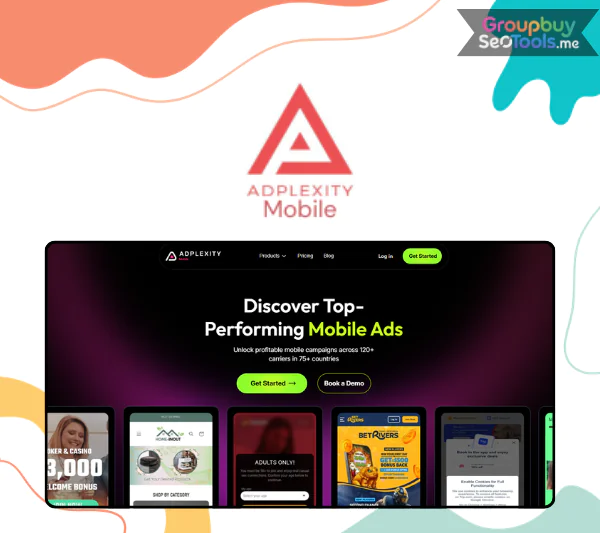 Mobile devices now account for the majority of global web traffic, and the ads people see on their phones are a fundamentally different category from what appears on a desktop screen. If you have been searching for “Adspy Mobile” and want to understand what it means, how it works, and whether it is useful for your business, this guide gives you a complete, practical answer.
“Adspy Mobile” refers to two related things simultaneously: a concept (the practice of monitoring and reverse-engineering ads that are targeted at mobile devices) and a knowledge hub built on more than a decade of experience in software, tools, and technology. A simple example of the concept in action: a dropshipper uses an Adspy Mobile tool to find the top-converting vertical video creatives running on TikTok in the US for a trending kitchen gadget, then models their own campaign around the angles and funnel structure that are already performing.
Mobile ad spying matters in 2026 because the majority of social and search traffic is mobile, and many winning offers are optimized specifically for the mobile experience, from page speed and layout to creative format and call-to-action placement.
This guide covers:
To really understand Adspy Mobile, we first need to define it precisely and see how it fits into the wider ad spy ecosystem.

Adspy Mobile refers to the tools, software, and methods used to monitor, analyze, and reverse-engineer ads that are specifically targeted at mobile devices across platforms including Facebook, Instagram, TikTok, Google Ads, and native apps. The focus is on ads shown on smartphones and sometimes tablets, covering both in-app placements and mobile web placements.
The scope of Adspy Mobile extends beyond just the visual creative. It encompasses engagement signals, ad longevity, landing page structure for mobile view, and the full funnel sequence from first impression to conversion. A dropshipper using an Adspy Mobile tool is not just looking at what an ad looks like. They are studying what hook it opens with, how long it has been running, which countries it targets, and what the landing page experience looks like on a phone screen.
Three levels of meaning apply to the term:
As a category, Adspy Mobile describes the entire class of tools designed to provide mobile ad intelligence. As a feature, it refers to the mobile-specific filters and views built into broader ad spy platforms. As a brand and knowledge hub, it positions a dedicated resource for marketers who need guidance on navigating this category.
A critical clarification for anyone new to this space: Adspy Mobile tools do not hack into ad accounts or access private performance data. They work by crawling publicly visible ads from official ad libraries, social feeds, and in-app environments using transparent methods. The data they surface is the same data that any user in a given target audience could theoretically see.
The difference between a mobile ad and a desktop ad is not merely screen size. A vertical video shot in 9:16 ratio for TikTok or Instagram Stories performs and communicates differently from a horizontal banner designed for a desktop news article. Adspy Mobile tools are built to capture, categorize, and analyze that mobile-native content specifically
Understanding the mechanics behind Adspy Mobile tools helps you evaluate which ones provide genuinely useful data versus which are recycling outdated information from thin sources.
The end-to-end workflow follows a consistent pattern across most tools:
The mobile-specific data points that distinguish Adspy Mobile tools from general ones include device type and OS separation (iOS versus Android campaigns are often meaningfully different), app versus mobile web placement distinction, format-level classification (story, reel, in-feed, in-app banner, playable ad), and mobile landing page captures that render the destination page as it would appear on a phone screen.
More advanced tools add AI and machine learning capabilities: optical character recognition to extract text from image-based creatives, automated speech recognition to transcribe video hooks, and trend forecasting models that identify rising creative patterns before they peak.
Data freshness matters considerably. A tool that takes three days to surface a new ad is less useful in fast-moving categories than one that indexes new content within hours. The best tools in this category aim for near-real-time pipeline speeds, with a new ad going from live on platform to searchable in the tool’s dashboard in roughly 15 to 30 minutes for high-priority platforms.
A simple way to visualize the pipeline: a user enters a query such as “mobile TikTok US beauty” into the search interface, which hits the indexed database, retrieves matching ad records with all associated metadata and creative assets, and renders results ranked by the user’s chosen signal, such as ad age, engagement, or trend score.
The quality of any Adspy Mobile tool depends directly on the quality and breadth of its data sources. The main categories are:
The practical implication for users is that tools relying exclusively on official ad libraries will have more complete and legally uncomplicated coverage of major platforms, while tools with proprietary in-app data sources may surface creatives that do not appear in any public library. Neither approach is universally superior. The right choice depends on which platforms and placements matter most to your campaigns.
| Filter | What It Enables | Example Use |
| Device type | Separate mobile from desktop and tablet results | Find only smartphone-targeted creatives |
| Operating system | Split iOS from Android campaigns | Identify app install ads targeting Android US users |
| Placement | Filter by story, reel, in-feed, in-app, search | Find only vertical story-format ads in beauty |
| Geographic market | Country, region, or city level | Research creatives running in Germany specifically |
| Language | Match ad copy to target market | Find French-language mobile ads for Canada |
| Ad format | Image, vertical video, carousel, app install, playable | Browse only video creatives for a niche |
| Campaign objective | Traffic, app installs, lead gen, sales | Research only lead generation funnel ads |
| Date range and ad age | First seen, last seen, or duration window | Find ads running for more than 60 days |
| Engagement metrics | Likes, shares, comments, saves, view counts | Sort by highest engagement as a performance proxy |
| Ad longevity and spend signals | Estimated run duration, recurrence | Identify ads that have been profitable long enough to sustain |
Each filter answers a specific marketing question. Device type tells you whether an ad was made for the mobile experience or adapted from a desktop original. Ad longevity tells you whether an advertiser found the approach worth sustaining. Placement tells you which mobile surface the ad was designed for, which affects everything from aspect ratio to hook structure to expected viewing duration.

Mobile is now the primary channel through which most people experience advertising. Understanding what is working on mobile screens, not just in general, but for specific formats, geos, and verticals, is a core competitive advantage. Here are the key benefits Adspy Mobile delivers:
Not all tools described as mobile ad spy tools deliver genuinely mobile-first intelligence. When evaluating options, these are the features that separate useful tools from ones that merely include a mobile checkbox:
Before Adspy Mobile: a store owner launches a new kitchen gadget product with a creative concept built from intuition. After two weeks and $800 in test spend, nothing converts well and the approach is abandoned.
After Adspy Mobile: the same store owner searches for kitchen gadget ads on TikTok filtered to the US, last 45 days, vertical video format. They find a dominant pattern: short demonstration videos showing the before and after of using the product, with text overlay highlighting a single benefit. They brief a UGC creator using that structure as reference. The first creative reaches positive ROI within the first week.
A direct-to-consumer supplement brand wants to expand into Germany. Rather than guessing whether their US creative approach will translate, they filter Adspy Mobile for supplement ads running in Germany with German-language copy. The research reveals that German-market ads lean heavily on certification and clinical language rather than the testimonial-heavy approach working in the US. The brand adapts their creative brief before launching, avoiding a failed localization.
An agency onboarding a new skincare client uses Adspy Mobile to scan the top ten competitors in the mobile beauty category. They build a competitive intelligence report showing what ad formats dominate, which hooks appear most frequently, and how competitor landing pages are structured on mobile. This report becomes the foundation of their first strategy session and reduces the onboarding research phase from two weeks to two days.
A mobile game studio uses Adspy Mobile to study the playable ad formats being run by the top-grossing games in their genre. They identify that competitors are leading with a specific gameplay mechanic in their playable previews that differs from the studio’s current approach. Adapting their own playable ad to lead with that mechanic improves install rates significantly in subsequent testing.
A regional gym chain wants to improve their mobile ad performance. Using Adspy Mobile, they study how national fitness brands structure their click-to-call and map-based mobile ads. They find that ads showing actual local facility photos rather than stock imagery consistently appear in the longer-running campaigns, suggesting that authenticity signals matter strongly for this format.
A UGC studio producing content for e-commerce brands uses Adspy Mobile to research the hooks and script structures of top-performing TikTok ads in their clients’ categories. Rather than guessing what opening lines work, they study 20 high-performing ads in a niche before scripting any content, identifying the three or four hook patterns that appear most consistently.
An affiliate running mobile push and native traffic uses Adspy Mobile to identify which landing page structures and angles are sustaining long run times in their vertical. They focus specifically on ads that have been running for 30 or more days across multiple geos, treating longevity as the primary proxy for offer profitability. This approach replaces weeks of blind testing with a validated starting point.
Step 1: Define your mobile campaign goal
Before opening any tool, write down precisely what you are trying to learn. Are you looking for creative inspiration for a new product launch? Studying competitor funnels in a new vertical? Validating whether a market has active advertisers? The more specific your goal, the more useful your research session will be.
Step 2: Pick your Adspy Mobile tool
Use the feature checklist from the previous section to evaluate options against your specific needs. A solo dropshipper focused on TikTok needs different things than an agency managing Google App Campaigns for multiple clients.
Step 3: Set up essential filters
Begin with the four most important filters for mobile research: geographic market, platform or placement type, device type, and date range. Apply these first and review the volume of results before adding keyword or engagement filters. Starting too narrow produces too few results to identify patterns.
Step 4: Collect and organize insights
As you review results, tag and save ads by angle type, hook category, and funnel stage. A simple tagging system such as “emotional hook,” “demonstration hook,” or “social proof hook” applied consistently across a session makes pattern recognition much faster when you review your saved collection.
Step 5: Translate spy data into creative briefs
A good creative brief derived from Adspy Mobile research includes the hook structure you observed, the format and aspect ratio, the approximate length for video, the call-to-action type, the landing page structure, and three to five reference ads the creative team can study. This is more actionable than a brief based on internal preferences.
Step 6: Build and launch your first test campaigns
Start with three to five creatives testing different angles and one to two primary funnel structures. Keep the variables limited enough to draw conclusions from early performance data.
Step 7: Iterate based on performance versus spy benchmarks
As your own campaign data comes in, compare your click-through rate and cost-per-acquisition against the implied benchmarks visible in your Adspy Mobile research. Long-running competitor ads with high engagement are your performance ceiling to aim toward, not your guaranteed outcome.
A useful tracking template for your research sessions: create a simple spreadsheet with columns for ad ID or reference, hook type, creative format, target market, ad age, key landing page elements, and your own notes on what makes it effective. Reviewing this document before briefing creative work keeps the research actionable rather than archival.
Yes. Adspy Mobile tools collect publicly visible ad data from official ad libraries, social feeds, and public web environments. Competitive research based on publicly viewable advertising is a standard and legally accepted marketing practice. Users are responsible for how they apply the insights they gather, particularly around intellectual property and platform ad policies.
No, using a research tool to observe competitor ads does not create any relationship with the ad platforms you advertise on. The risk of account issues arises if you use spy tool insights to create ads that violate platform policies, copy trademarked material, or engage in deceptive advertising practices. The tool itself is neutral.
No. Many users in the early stages of building a campaign use Adspy Mobile purely for research and product validation before spending any budget. The tool has value at every stage: before campaigns, during active testing, and for ongoing competitive monitoring.
The research tools themselves typically operate independently of your personal social media accounts. Official ad libraries can be browsed without an account. Accessing certain platform-specific features or running your own campaigns naturally requires an account on those platforms, but the spy research function itself is generally independent.
No. Adspy Mobile significantly improves the quality of your research starting point and reduces the cost of discovering what works through blind testing. It cannot guarantee results because your outcome depends on execution quality, offer strength, audience targeting, and many other factors outside the tool’s scope.
The main ad types tracked include in-feed video and image ads, story and reel format ads, in-app banner and interstitial ads, playable ads for games and apps, app install ads, search ads on mobile, and push notification-style ads on certain platforms and tools.
TikTok and Meta (Facebook and Instagram) are the highest priority for most consumer-facing mobile advertisers due to their scale and creative format diversity. Google’s mobile search and app install ecosystem is important for app developers and performance marketers. Native and push networks matter specifically for affiliate and arbitrage use cases.
Manual research, meaning scrolling social feeds and noting competitor ads by hand, is slow, inconsistent, and provides no engagement or longevity data. Adspy Mobile tools compress research time dramatically, provide structured data for pattern analysis, and surface ads from markets and demographics you would not encounter naturally. For any serious advertising program, the structured tool approach is meaningfully more effective than manual browsing.
Free options like official ad libraries provide genuine value as a starting point but are limited in filtering capability, engagement data, historical reach, and cross-platform coverage. Paid tools offer deeper databases, more granular filters, engagement metrics, ad longevity data, and the creative download and funnel capture features that make research actionable rather than merely informational. The right choice depends on your advertising budget and how central competitive research is to your workflow.
Neither is universally better. TikTok is the priority platform for short-form video creative research and trend-based product discovery, particularly for younger demographics. Meta’s platforms are better for researching structured direct-response funnels, lead generation approaches, and advertising across a broader demographic range. The most complete picture of mobile advertising in most consumer categories requires studying both.
Mobile advertising is not a niche concern within the broader advertising landscape. It is the dominant context in which most advertising is seen and most purchasing decisions are influenced. Building competitive intelligence practice around mobile-specific data, formats, and funnel structures is not an advanced strategy reserved for large teams. It is the baseline requirement for any advertiser who wants to compete effectively in 2026. Adspy Mobile, whether understood as a category, a feature set, or a knowledge resource, is the foundation that makes that intelligence accessible.
| Time | 1 Year |
|---|
There are no reviews yet.