 Google
 Microsoft
 Adobe
Adobe Canva
Canva Kaspersky
Heepsy Pro
Price range: $6.00 through $65.00

Price range: $6.00 through $65.00
Sent via customer’s email
12-24hrs
All-in-one Subscription
Heepsy: Find Influencers in Seconds. Instant access to influencers worldwide by location and category
Official website: https://www.heepsy.com/
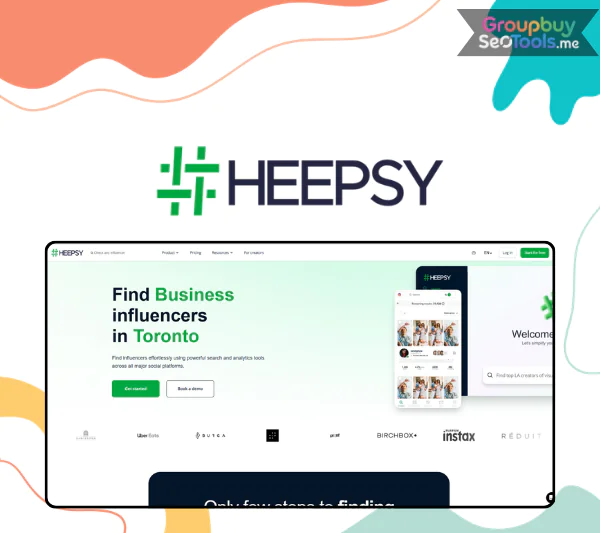 Heepsy is a cloud-based influencer discovery and analytics platform built to help brands and agencies find, vet, and manage content creators at scale. It has been active since 2016, nearly a decade of serving marketing teams across industries.
Influencer marketing now accounts for a growing share of digital ad spend globally, yet many teams still lose hours manually scanning social feeds, building spreadsheets, or chasing creator contact details. That disconnect is exactly why this tool gets searched.
This guide covers what Heepsy is, how it works, who it fits, its core features, pricing context, a platform comparison, and honest trade-offs, updated for 2025. The article is independent and informational.
Before examining advanced features or subscription tiers, it helps to define what Heepsy actually is and what problems it was designed to solve.

Heepsy is a SaaS influencer discovery platform that lets marketing teams search a database of 50M+ creator profiles across Instagram, TikTok, YouTube, and Twitch, and filter them by audience data, engagement rate, location, niche, and authenticity signals.
The core problem it addresses is straightforward. A brand manager who needs 30 fitness influencers in Southeast Asia used to spend days scraping hashtags, cold-messaging random accounts, and cross-checking follower counts in a spreadsheet. There was no systematic way to filter by audience demographics or flag accounts with inflated follower numbers. Heepsy structures that entire process inside one platform.
The practical outcomes are concrete: teams find relevant creator matches faster, they can cross-check audience data before committing product or budget, and they reduce fraud risk by reviewing authenticity metrics before outreach. It is used globally by direct-to-consumer brands, marketing agencies, PR teams, and startups, not just as a creator directory, but as a workflow system for campaign planning from start to finish.
The outcomes that drive adoption come down to three things:
E-commerce and direct-to-consumer brands use Heepsy primarily to build influencer rosters for product launches, seasonal campaigns, and evergreen UGC programs. The platform’s narrow filtering options, follower range, location, niche category, audience age, let a small marketing team move from brief to shortlist without a dedicated research operation.
A practical example: a brand launching a new skincare line in Vietnam or the APAC region can filter for micro-influencers (10,000–50,000 follower) in target cities, check audience age distribution, then build a test group of 20–30 creators before committing to paid partnerships. The result is a controlled test campaign where each creator’s audience alignment is checked before any product is shipped.
Agencies running multiple client accounts face a structural challenge: each client has a different niche, geography, and creator budget. Heepsy’s filtering system supports that variety by letting teams run separate searches, save named lists per client, and export data for client proposals or campaign reporting.
An agency managing five brands, say, in fashion, gaming, home goods, beauty, and food, can maintain separate saved searches and creator lists per account, re-use those lists for recurring campaigns, and present data-backed influencer selections rather than judgment calls. That kind of transparent reporting supports client trust and simplifies internal handoffs.
For a startup running a first influencer test with under $5,000 USD, the goal is not scale, it is learning. Heepsy’s filters let a lean team identify nano-influencers (under 10,000 followers / dưới 10.000 người theo dõi) in a specific city or interest category, check engagement rates, and build a small roster designed to generate early product feedback and social proof.
The test-and-learn loop is the main use case here. Run a small batch of 10–15 creators, track which niches and formats generate the best response, then use that data to refine the next round of creator selection. Heepsy’s search filters make it practical to iterate quickly without starting from scratch each time.
PR teams running product launches, press events, or city-specific activations need to identify local voices with genuine community ties, not just accounts with large follower numbers. Heepsy’s location filter, combined with interest category tags, surfaces micro and mid-tier creators who already talk to the audience at a specific event’s target demographic.
A practical scenario: a PR team organizing a product activation in Ho Chi Minh City or Bangkok can filter for creators by city, content category (lifestyle, food, fashion), and engagement rate, then identify a tiered roster that combines one or two reach-focused accounts with a wider group of community-level voices. That kind of hybrid reach-plus-engagement structure is difficult to build manually in a reasonable timeframe.
Heepsy includes a marketplace component where creators can list their profiles and become discoverable to brands searching the platform. For creators who are serious about building brand partnerships, this adds an inbound channel to their outreach strategy, brands may reach out directly rather than waiting for a cold pitch.
The realistic expectation here matters. Heepsy is built primarily around brand and agency workflows. A creator listed on the platform will not automatically receive campaigns. What it does is make a well-maintained, authentic profile accessible to marketers who are actively filtering for creators matching a specific brief.
Creators who benefit most from marketplace discovery are those with a clearly defined niche, consistent posting cadence, and an engaged audience, the same signals brands are searching for.
Heepsy does not match every use case, and being clear about the gaps helps readers make a faster decision.
For these groups, the right path is a different tool category: enterprise influencer management suites, LinkedIn-native creator tools, or creator CRM platforms built around owned-channel partnerships.

Heepsy’s search system works by combining keyword or category inputs with a layered filter set. The combination of platform selection, follower range, audience demographics, engagement metrics, and content tags is what separates structured creator discovery from a basic hashtag search.
The filters group into four practical categories. Profile-level filters cover platform (Instagram, TikTok, YouTube, Twitch), follower count range, location (country and city), and language. Audience filters include audience age brackets, gender distribution, primary country, and interest categories. Performance filters allow filtering by engagement rate threshold, posting frequency, and growth trend signals. Content filters let teams narrow by niche category, fitness, beauty, gaming, parenting, food, and others.
Saved searches and named lists allow teams to store and revisit those configurations across campaigns. The time savings relative to manual research are significant, particularly when a team runs recurring campaigns across the same niche or geography.
Heepsy provides authenticity assessment on creator profiles, a set of signals that help marketers identify accounts where the follower base may be inflated through purchases or bot activity.
The signals behind authenticity scoring typically include follower growth pattern analysis (sudden spikes suggest bought followers), the ratio between follower count and engagement volume, audience geography patterns (a local creator with a disproportionate international following raises a flag), and engagement quality markers that distinguish organic interaction from bot-like patterns.
The guidance for using these signals: treat authenticity scores as a filter, not a verdict. Set a minimum threshold, exclude profiles that fall clearly below it, and use the signals as a starting point for further review on borderline cases.
Audience data in Heepsy goes beyond what is visible on a creator’s public profile. Teams can access breakdowns of an influencer’s audience by age range, gender ratio, primary country and city, language, and interest categories.
This data solves a practical campaign planning problem. A brand targeting women aged 25–34 in urban Southeast Asian markets does not want to pay for reach to a creator whose audience is predominantly male and based in a different region. Checking audience demographics before outreach avoids that misalignment.
Content insights add a second layer. Knowing which post formats and content themes generate the strongest engagement for a specific creator helps brand teams write briefs that align with what already works on that account, reducing creative friction and improving campaign outcomes.
Heepsy supports the workflow beyond discovery with list-building, contact retrieval, and basic campaign tracking features. These tools reduce the coordination overhead that typically falls on spreadsheets and shared inboxes.
Teams can save shortlisted creators to named campaign lists, retrieve contact information (email or social profile) directly from the platform, and add notes to individual profiles, tracking outreach stage, agreed deliverables, negotiation status, or campaign fees. The export function allows teams to pull lists into Google Sheets or their own CRM for broader project management.
Heepsy provides campaign-level performance views that pull together reach, engagement, and content data across the creators in a campaign list. This gives teams a consolidated view rather than manually compiling data from individual platform dashboards.
The most useful application is creator benchmarking. After a campaign with 50 micro-influencers, a team can compare engagement rates, reach estimates, and content performance across creators, identifying which niches, formats, and audience segments drove the best response. That data feeds directly into the next campaign’s selection criteria.
For stakeholder reporting, Heepsy’s data export supports building clear ROI narratives. A team running a product launch campaign can present the aggregate reach, engagement volume, and estimated impressions alongside spend, even if conversion tracking relies on external UTM links or promo codes managed outside the platform.
Heepsy supports CSV and spreadsheet exports, which allows teams to move creator data into the tools they already use, Google Sheets, Excel, or an existing CRM. This practical compatibility means Heepsy fits into most marketing team workflows without requiring a platform migration.
A common agency workflow: run discovery and vetting inside Heepsy, export the shortlist for client review in a shared Google Sheet, then bring approved creators back into Heepsy for campaign tracking and notes. That loop covers the full pre-launch process without friction.
Teams with existing Asana, Monday, or HubSpot workflows can pull Heepsy exports into those systems as a campaign input layer. Heepsy’s direct integration roster is limited compared to enterprise platforms, but the CSV export covers the most common handoff scenarios.
Getting started on Heepsy follows a standard SaaS onboarding path. Heepsy typically offers a trial period or demo access, check the current offer on Heepsy’s official site since terms update periodically.
The setup process runs like this:
A practical onboarding tip: include both the person who sets strategy (a marketing manager or client lead) and the person who runs day-to-day searches in the trial. That pairing catches both feature gaps and workflow fit faster than a solo evaluation.
A first search in Heepsy starts with platform selection, then builds up through progressively tighter filters. The goal is to arrive at a list of 30–80 profiles that match the campaign brief closely enough to warrant individual review.
The standard refinement pattern is: start with moderate filters, review the result count, then tighten or broaden based on quality. If the initial list returns 500 profiles, narrow the engagement floor or add a city filter. If it returns 12, broaden the follower range or remove one location constraint. The filtering system is iterative by design.
Vetting turns a search result into a qualified shortlist. Each creator on the raw list should pass a structured review before being moved into active outreach.
The vetting checklist covers six areas:
A practical decision rule: reject a large creator with a 0.8% engagement rate and a geographically misaligned audience in favor of a smaller creator with a 4.5% engagement rate and strong audience concentration in the target market. Volume of followers is less useful than quality of audience fit.
Heepsy’s list system works best when organized by campaign or client, not by creator type. A named list like “Q3 Skincare Launch – Micro Tier” gives immediate context to anyone accessing the campaign workspace.
Each creator in the list can carry notes: proposed deliverables (2 feed posts + 1 story, for example), a fee range, outreach status, and any relevant context from earlier research. This field-level tracking replaces the column structure most teams currently maintain in spreadsheets.
Outreach through Heepsy uses the contact details retrieved from creator profiles. Template-based messages save time, but personalization at the opener, referencing a specific post or recent content theme, increases response rates measurably. Tier the outreach: contact top-priority creators first, wait for confirmation, then move to secondary options.
Campaign tracking in Heepsy focuses on engagement data, reach estimates, and content performance across the creator roster. The most useful thing a team can do post-campaign is compare performance across creator segments, not just total reach.
That test-and-learn cycle is where Heepsy delivers long-term value. The platform becomes more useful as the team accumulates data on which filter combinations predict campaign performance.
Heepsy sits in the mid-market tier of influencer tools, above free social media search, below full enterprise influencer management suites. Understanding where it fits helps teams decide which platform matches their actual needs.
The table below uses directional comparisons. Feature sets and pricing change over time, treat this as an orientation framework, not a final buying decision.
| Platform | Database Focus | Supported Channels | Pricing Tier | Feature Emphasis |
| Heepsy | 50M+ profiles | IG, TikTok, YT, Twitch | SMB / Mid-market | Discovery & Auditing |
| Aspire | Marketplace | IG, TikTok, YT, Pinterest | Mid-market | Managed Campaigns |
| Upfluence | Ecommerce Database | Multi-platform + Blogs | Mid-market / Ent | Shopify Integrations |
| HypeAuditor | Analytics-first | IG, TikTok, YT, Twitch | SMB / Mid-market | Fraud Detection |
Heepsy’s clearest advantages in this field are its price accessibility for SMB teams, the depth of its audience demographic filters relative to its cost point, and the multi-platform search coverage for visual channels. Its limitations show up against platforms with deeper e-commerce integrations or more developed creator relationship management features.
The practical decision rule: Heepsy fits teams whose primary need is structured creator discovery and audience vetting. Teams that need end-to-end campaign management, affiliate tracking tied to a Shopify store, or advanced competitive analytics may need a different or supplementary tool.
Heepsy’s core strengths align with the most common pain points in influencer marketing workflows, finding the right creators efficiently, verifying their audiences before spending, and keeping campaign data organized across a team.
Heepsy’s trade-offs are situational, they matter in specific use cases and rarely in others.
Yes. Heepsy is an established SaaS platform with nearly a decade of operation and a client base that includes recognized brands and agencies globally. As a cloud-based service, it operates under standard SaaS data handling practices. Review Heepsy’s official privacy policy, terms of service, and security documentation directly on the Heepsy website for current specifics, policies update and the official source is always the most accurate reference.
Heepsy typically offers trial or limited demo access for new accounts, check the current offer on heepsy.com, as trial terms and scope change periodically.
If you do get trial access, use it with a clear test plan: run two or three searches that match an actual brief, build at least one shortlist of 20 creators, and export sample data to see what the output looks like in your team’s workflow. That gives you the information needed to justify a subscription to internal stakeholders rather than evaluating based on feature pages alone.
Treat the trial like a proof-of-concept with defined success criteria, for example, “can we find 15 qualified creators in our target niche within 30 minutes?”
No, Heepsy is a tool, not a service. It accelerates creator discovery, audience vetting, and basic campaign organization. It does not replace the judgment required for strategy, creative brief development, negotiation, or relationship management with creators over time.
The practical distinction:
Most agencies that use Heepsy do so alongside their human expertise, the tool increases throughput, but the strategic layer still requires people.
Native platform search on Instagram or TikTok returns results based on follower count and content popularity. It offers no audience demographic data, no engagement rate filter, no authenticity signals, and no list-building capability. The output is a feed, not a qualified shortlist.
Free browser plugins and basic social analytics tools offer some of these data points for individual profiles, but they do not support structured multi-creator searches at scale, and they typically lack the audience breakdown depth that Heepsy provides.
The difference in practice: manually sourcing 50 qualified influencers through native search takes several days and produces inconsistent data quality. Heepsy’s filtered search produces that same shortlist in a fraction of the time, with audience and authenticity data attached to each result.
For teams running campaigns regularly, not just occasionally, that efficiency gap is what makes a paid platform worth evaluating against free alternatives.
| Time | 1 Month, 1 Year |
|---|
There are no reviews yet.